6
minute read
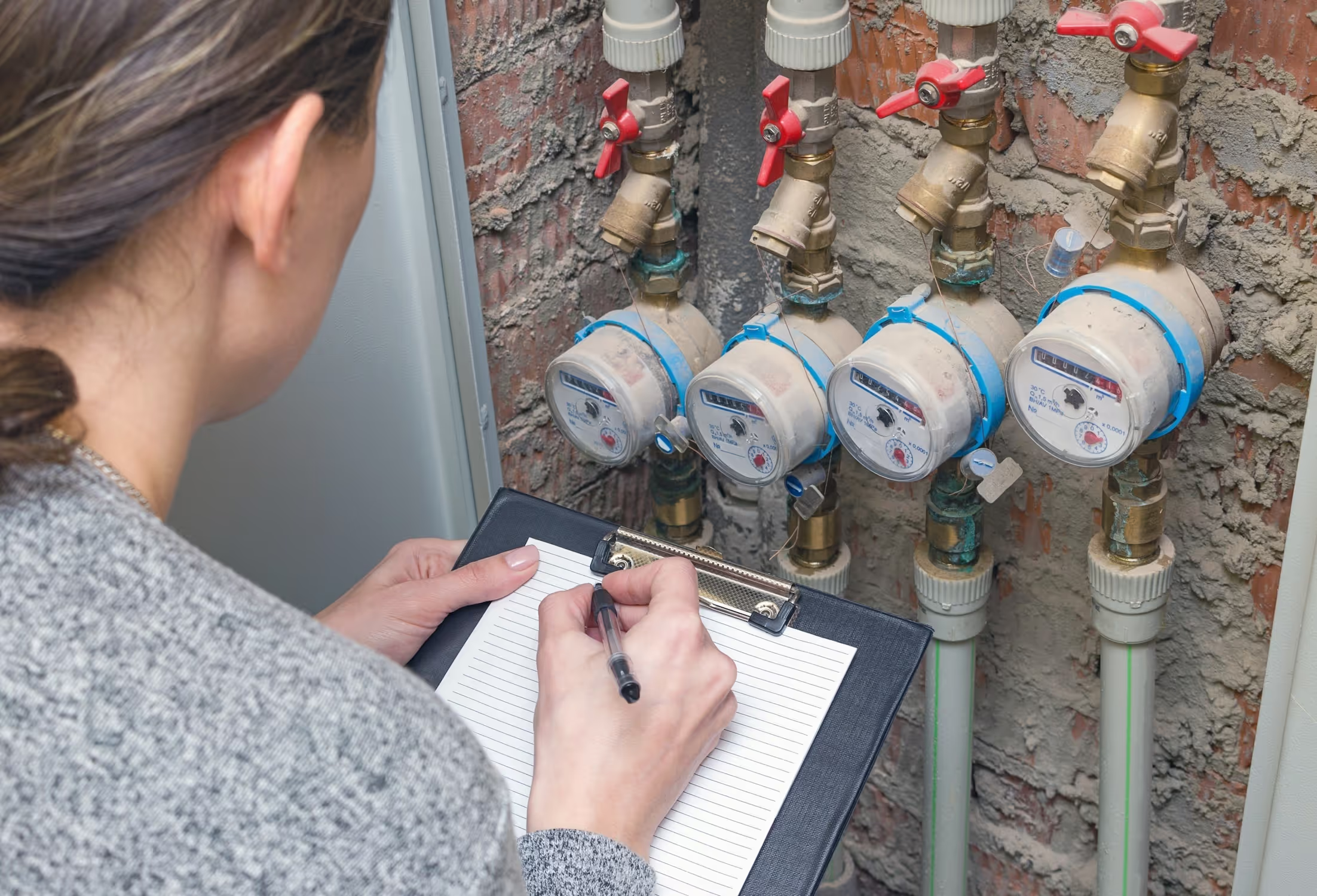


Smart meter deployment represents one of the most significant infrastructure investments in the electric utility sector over the last two decades. Adoption rates have reached critical mass, and the technology is now fundamentally reshaping the utility landscape.
Today, utilities have completed massive rollout campaigns, with over 130 million smart meters installed across residential and commercial segments. Approximately 80% of all U.S. residential customers are now served by these advanced metering systems, with annual deployments consistently exceeding 8 million units nationwide.
While the sheer scale of this rollout is impressive, electric utilities should view the successful deployment of smart meter technology as only the beginning of a larger transformation. For many utilities, the primary focus during the initial phase was managing installation logistics, ensuring stable communication networks, and stabilizing basic meter reading functionality. However, the true value of smart meter technology lies in its capacity to transform multiple areas of the utility entirely.
To fully capture the return on investment, utilities must leverage this data across three interconnected pillars:
Utilities that do not move past the data collection phase risk leaving tens of millions of dollars in potential operational savings, customer value, and grid efficiency benefits on the table.
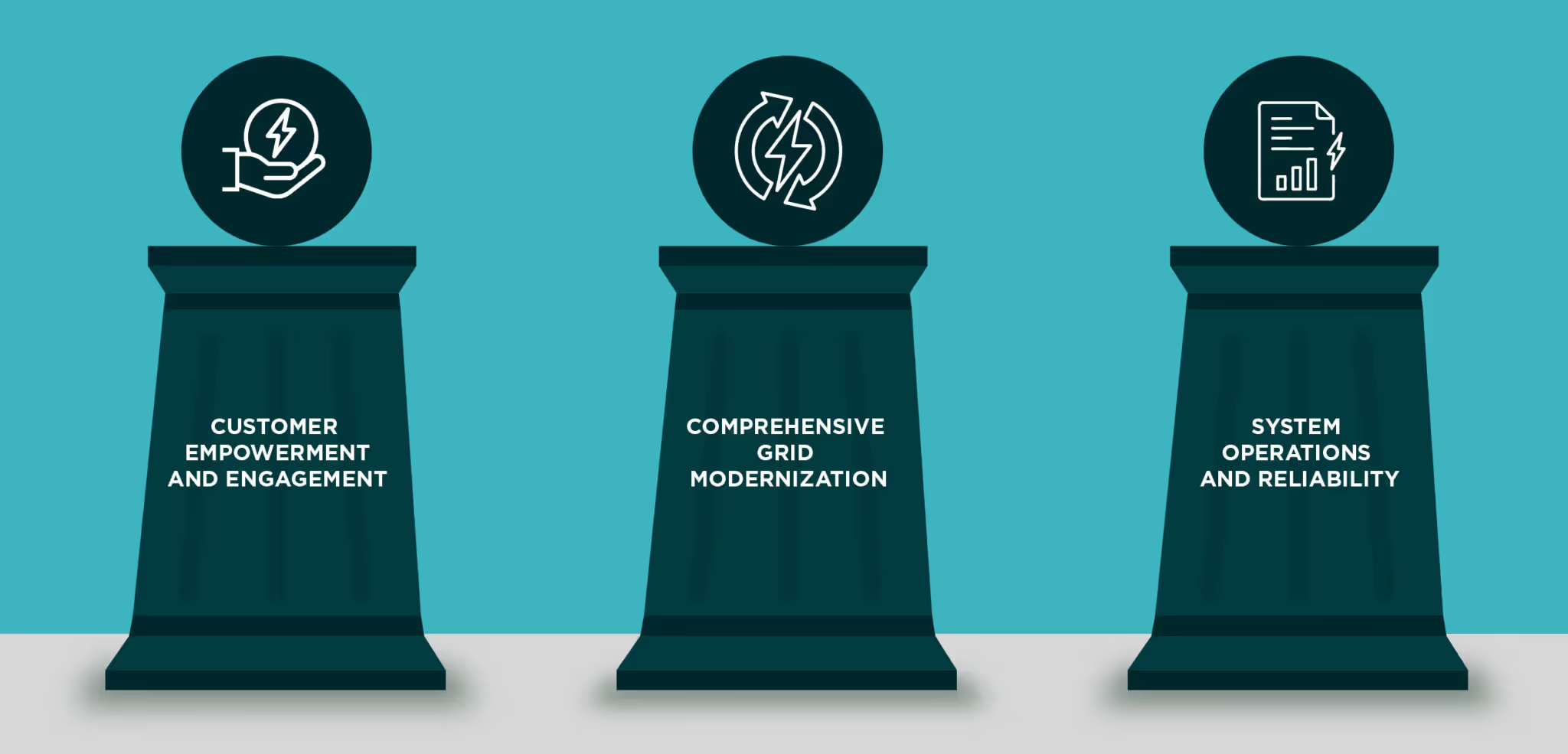
This category of smart meter benefits involves leveraging data to enhance customer experience. Smart meters can transition the customer from a passive receiver of electricity to an active participant in managing their consumption.
Secure online portals and mobile applications are essential for allowing customers to view electricity consumption and profile information in near real-time. This creates opportunities for much deeper and consistent engagement. The key action here is to develop and launch user-friendly digital tools that offer actual value, such as the ability to optimize electricity costs based on usage patterns.
The precise tracking of electricity usage down to the 15-minute interval forms the basis for more sophisticated and efficient rate designs. This data allows utilities to design time-of-use (TOU) rates that incentivize customers to shift usage patterns or reduce consumption during costly peak periods. Utilities should prioritize the design and implementation of TOU rate structures for all customer segments.
Avoiding customer “bill shock” is a related benefit that smart meter data may enable. Utilities can notify customers via text or email when usage is trending significantly above normal or approaches a self-set limit, prompting pre-emptive action. Developing these types of proactive alert services can contribute to improved customer satisfaction.
Smart meter data is indispensable for planning, operating, and investing in the modern electric grid, one characterized by distributed renewable energy sources and evolving usage patterns.
The detailed electricity usage data available at the circuit and feeder level allows for far more accurate load forecasting than historical methods. Utilities should integrate this data into their transmission and distribution infrastructure capital planning, as well as into wholesale power procurement processes, to ensure optimal resource allocation and investment timing.
As rooftop solar penetration grows, smart meters become essential by tracking bi-directional power flows at the customer interconnect. This capability enables accurate net metering and DER compensation methods. Leading utilities are designing rates that utilize this power flow data to compensate DER owners accurately and fairly. Care must be taken to identify the specific benefits of DER to the grid and ensure compensation is allocated equitably.
[[CTA:subscribe]]
Electric vehicle (EV) chargers often exhibit poor load profiles, characterized by high demand periods that strain local distribution infrastructure. Smart meters capture the demand and time stamp information needed to design rates that properly allocate capacity and other costs associated with EV charging. EV charging rates should be structured not only to support adoption but also to effectively manage system load and ensure equitable treatment of costs.
Smart meter data offers immediate and measurable benefits to day-to-day operations and core reliability metrics.
Smart meter technology can be configured to provide prompt notification of power outages and detail the precise scope of an event, which can drastically optimize crew dispatch processes. Utilities that have implemented these capabilities achieve faster restoration times and improved reliability, coupled with reduced call center volumes due to automated reporting. Utilities should consider redesigning their call center and crew dispatch processes to fully leverage smart meter outage capabilities.
The ability to remotely turn service on or off provides significant cost savings, faster service turnarounds for customers, and highly efficient management of non-pay disconnects and reconnects. More broadly, improved processes and grid optimization enabled by smart meter technology can create quantifiable results, with some studies showing electricity loss rates decreasing by an average of 4% after installation. Processes for service changes and credit management should be redesigned to capture this remote capability fully.
Smart meters can precisely monitor voltage at the customer location, providing insights into grid conditions that traditional SCADA systems cannot offer. This capability is used to ensure power quality, reduce line losses, and identify potential issues in grid management. Leading utilities are now utilizing this data to manage voltage regulators, identify potential transformer overloads, and pinpoint issues before they become widespread, resulting in improved asset management and reduced capital spending.
Smart meter deployment represents a substantial investment. However, simply installing the hardware is not enough. The actual return on investment is realized through the disciplined and strategic implementation of operational, customer, and grid modernization programs that smart meter data enables. Leading utilities of the future will be those that most effectively integrate technology, operations, and financial strategy.
At Raftelis, we focus our efforts on municipal and local governments, providing a wide range of services to help ensure our clients’ success. It is this municipal segment focus and holistic approach that makes us among the most trusted advisors to organizations like yours. We understand the numerous factors that must be considered to truly leverage the value of smart meter technology. For more information on how to capture smart meter benefits, please reach out to Steve Courtney.
Link copied