

Organization:
City of Fort Worth, TX

Location:
Fort Worth, TX

Recruiter:
Pamela Wideman

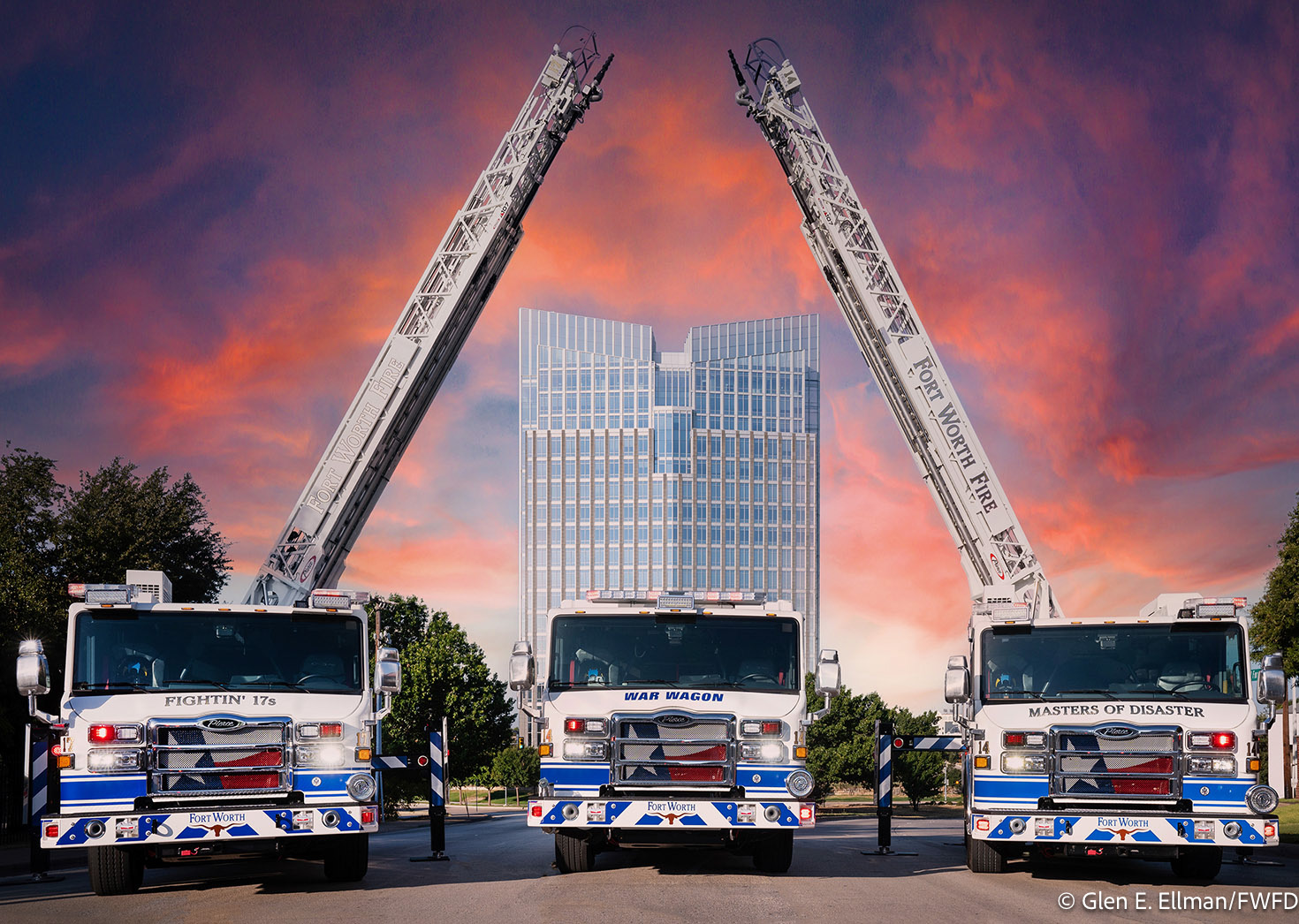
The City of Fort Worth seeks a collaborative, decisive, and data-driven leader to serve as its next Fire Chief. Operating within a Council-Manager form of government, the Fire Chief is a key member of the executive leadership team, reporting to an Assistant City Manager and partnering closely with the City Manager's Office and other City departments such as the Office of the Medical Director, Emergency Management and Communications, the Fort Worth Lab, and the City Attorney's Office.
The Fire Chief leads a department of over 1,700 personnel serving more than one million residents. The Chief oversees traditional fire suppression, technical rescue, disaster response, and a newly integrated Emergency Medical Services (EMS) operation. Following the July 2025 transition of private ambulance service into the Fort Worth Fire Department (FWFD), the agency is evolving into a blended Fire and EMS department backed by strong leadership, support from the City Manager's Office and community commitment. Today, the workforce comprises approximately 1,100 dual-role firefighters and just under 600 single-role EMS professionals staffing City ambulances. Key priorities include continuing the operational, cultural, and facility integration of ambulance service into the Fort Worth Fire Department, while planning and evaluating the need for new capital infrastructure for the growing city.
Directing daily and long-range operations, the Chief plans, administers, and evaluates departmental programs, processes, and standards. The role carries full responsibility for policy administration, professional standards, and compliance with federal, state, and local laws, codes, and regulations, as well as monitoring the departmental data that guides deployment decisions. The Chief is responsible for the Fire Department’s financial performance, which includes annual budget development and monthly revenue and expenditure forecasting for operating and capital budgets.
The Chief manages labor relations in close coordination with the Fort Worth Professional Firefighters Association, serves on the City's Collective Bargaining team, and monitors compliance with contractual commitments. Additionally, the Chief supervises personnel directly and through subordinate commanders, overseeing work assignments, performance evaluations, staff training, workplace health and safety, policy compliance, and hiring, disciplinary, and termination decisions or recommendations.
As the public face of FWFD, the Chief communicates regularly with the Mayor, City Council, boards, commissions, and community groups. Regionally, the Chief oversees EMS delivery to 13 neighboring municipalities, county and statewide mutual aid agreements, frequently deploying specialized FWFD disaster response teams for wildfires, tornadoes, flooding, and major emergencies.
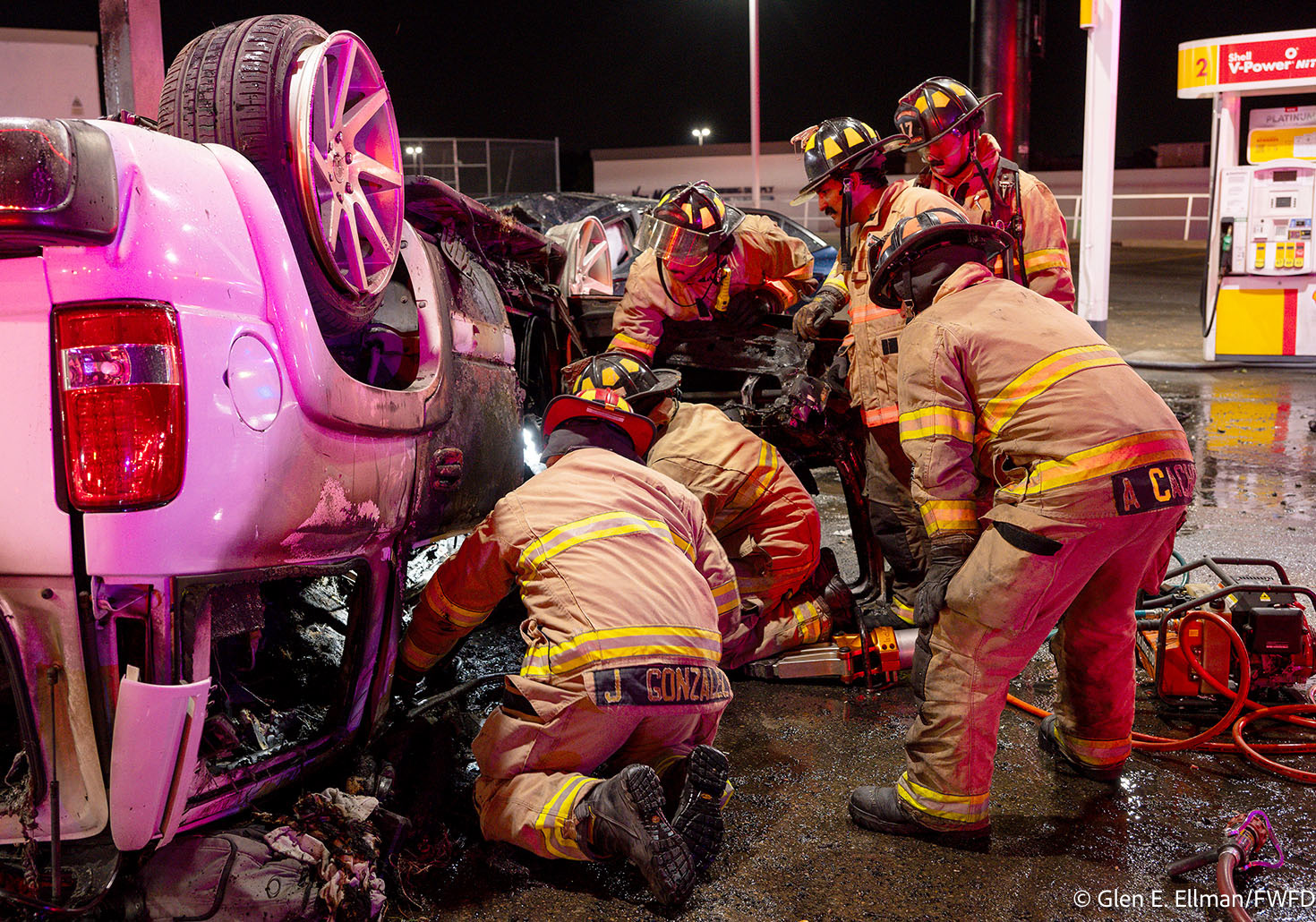
The ideal candidate is a confident, decisive, and steadfast leader who balances authentic commitment to fire service with executive vision, innovation, and attention to detail. Well-spoken and calm under pressure, the Chief serves as true ambassador for the department and the City. As a proven leader of an organization of comparable size and scope, he/she will remain open to diverse perspectives, while providing firm, consistent, and unwavering managerial courage.
The successful candidate brings deep operational fluency in fire suppression and emergency medical services, grounded in direct experience leading a blended Fire and EMS agency. This includes thorough knowledge of pre-hospital medicine regulations, credentialing compliance, and the statutory authority under which EMS personnel practice on the Medical Director's license. A pragmatic change agent, the Chief will assess and optimize existing programs, operational models, and administrative systems before introducing new initiatives, establishing clear, predictable protocols and performance management systems across all ranks.
Highly data-literate and analytical, the Chief will rely on data rather than intuition to analyze problems, project outcomes, and guide deployment and life-safety decisions, translating strategic plans into high-quality service in the community. The Chief will also bring strong financial, project management, and budgetary acumen to manage operating and capital budgets in two separate funds, effectively managing overtime costs and capital expenditures. With research and grants, the Chief will ensure regulatory compliance and commit resources only to initiatives directly benefiting FWFD personnel, the service area, and the fire and EMS industry.
Leading with humility and leaving ego at the door, the Chief will be a collegial team player with prior executive experience in a Council-Manager government, building trust with the City Manager's Office, peer directors (Police, Emergency Management and 911 Communications, and OMD), and other City departments. Politically savvy and visible, the Chief will communicate effectively orally and in writing, aligning policy and operations with the Mayor and City Council, engaging transparently with residents, and managing regional and statewide mutual aid partnerships.
Internally, the Chief will understand the distinct motivations of dual-role firefighters and single-role EMS providers and create an environment where all personnel feel valued and respected. Proven unionized labor experience will be vital to building constructive relationships with the Fort Worth Professional Firefighters Association and administering collective bargaining agreements while maintaining operational and fiscal accountability. Grounded in ethical integrity, the Chief will enforce a fair, firm culture of accountability, making tough personnel and disciplinary decisions, when necessary, while actively promoting mental health and wellness resources for all personnel.

Minimum requirements include a bachelor's degree from an accredited college or university in fire science, public administration, or a closely related field, and eight years of increasingly responsible command and supervisory experience in an organized fire department (including fire suppression, EMS, technical rescue, disaster response, strategic planning, multi-fund budgeting, and grant management), with four years of administrative and supervisory experience.
Preferred qualifications include leadership within a blended Fire and EMS agency or municipal ambulance system (including pre-hospital medicine regulations, credentialing compliance, and Medical Director partnership), executive experience in a Council-Manager government, and unionized labor experience managing collective bargaining agreements and labor relations. Strong financial and budgetary acumen (managing overtime, cost efficiencies, capital infrastructure planning, and state, federal, and research grants), experience managing regional and statewide mutual aid agreements, and a record of leading process improvements, professional standards, and disciplinary systems in a large, diverse agency are also preferred.
Guided by its mission "to serve and protect our community through education, prevention, preparedness, and response," the Fort Worth Fire Department (FWFD) protects one of the fastest-growing metropolitan areas in the country. Covering a service territory of over 360 square miles across the nation's 10th largest city, FWFD delivers a comprehensive range of life-safety services, including fire suppression, technical rescue, emergency medical transport, disaster preparedness, public education, and fire prevention. Operating out of 45 fire stations with an operating budget of $350 million, the department has earned a reputation as one of the most efficient and respected agencies in the nation.
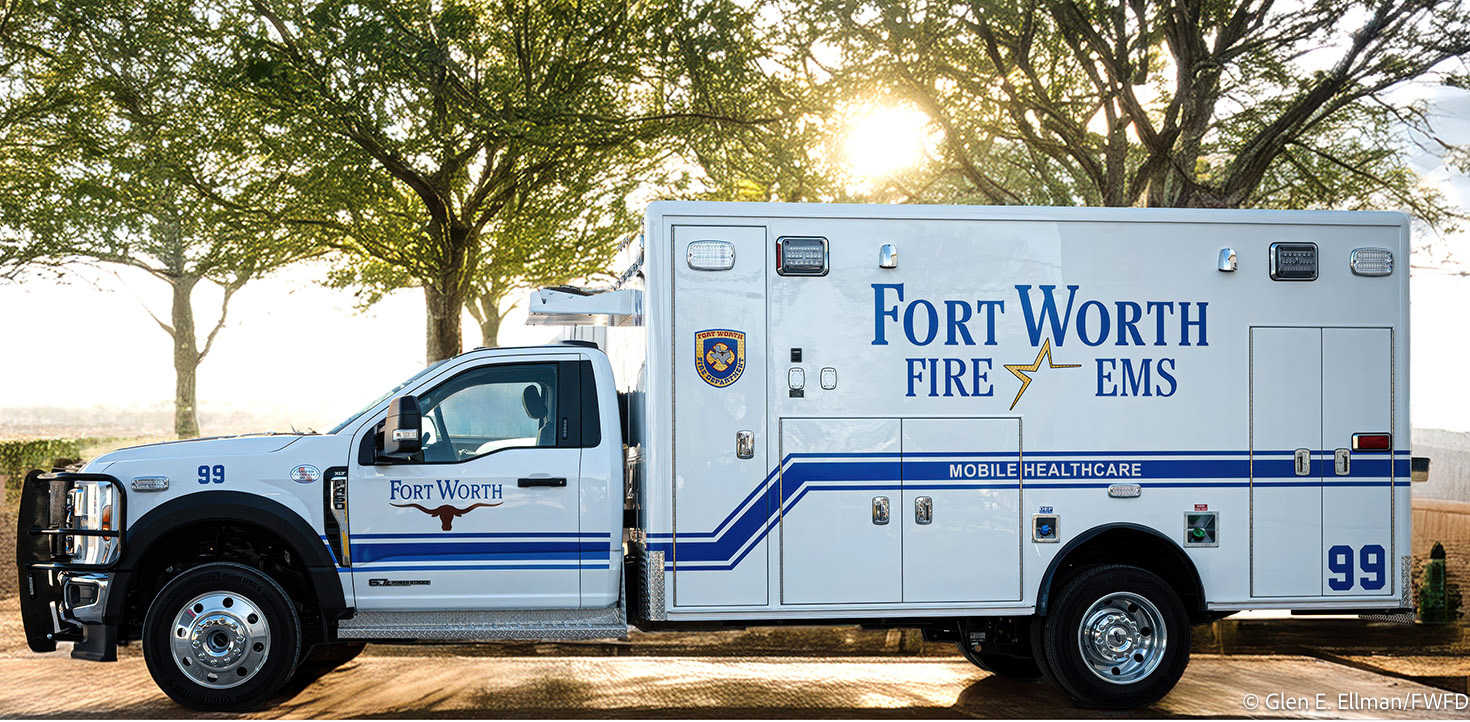
Historically a fire-suppression-only agency that partnered with MedStar since 1986 for ambulance transport, FWFD significantly expanded its operational scope following a May 2024 Fort Worth City Council decision to adopt the EMS Ad Hoc Committee's recommendations and establish a municipal EMS system directly within the Fire Department. Completed on July 1, 2025, after extensive regional collaboration, this monumental transition integrated MedStar and Fort Worth Fire employees under one agency to provide a financially sustainable, responsive, and timely system focused on patient-centered care.
Today, FWFD is the second-largest employee group in the City, supported by a skilled workforce of approximately 1,100 dual-role firefighters and just under 600 single-role EMS professionals. Fire suppression operations run under a mandated four-person staffing model on fire apparatus, supported by the Fort Worth Fire Academy, and a stable, long-tenured firefighter workforce represented under a four-year Collective Bargaining Agreement. Alongside suppression crews, dedicated single-role paramedics and EMTs staff the City's ambulances and focus exclusively on pre-hospital medical care. Clinical oversight and provider credentialing are provided by the City's Office of the Medical Director (OMD), which applies the Institute for Healthcare Improvement (IHI) model to continually refine clinical outcomes and partner with field crews on quality improvement.
Beyond Fort Worth's municipal boundaries, FWFD and OMD maintain a substantial regional and statewide footprint, providing direct EMS transport and medical direction to 13 surrounding municipalities. The department also maintains direct mutual aid agreements with neighboring cities and Tarrant County, as well as a master mutual aid agreement with the State of Texas, regularly deploying specialized FWFD disaster response teams across the state for wildfires, tornadoes, flooding, and major emergencies.

Fort Worth was once an essential stop on the legendary cattle drives from Texas to Kansas and home to cattle barons and oil wildcatters. Today’s Fort Worth is a modern metropolis which seamlessly blends its cattle and oil heritages with a vast array of businesses, industries, and entertainment. Known for its commitment to preserving its history, Fort Worth proudly celebrates the famous Stockyards National Historic District, home to twice a-day cattle drives, Billy Bob’s Texas — the world’s largest honky-tonk — and Mule Alley, formerly the horse and mule barns used during World War I and now home to restaurants, shops, western heritage brands, and creative workspaces. This ability to blend past and present with cowboys and culture enables Fort Worth to successfully promote its culture of charm, expansiveness, and Texas hospitality.
As the nation’s 10th largest city and Texas’ 4th largest city, with a population of over one million residents, Fort Worth is one of the fastest-growing major cities. Fort Worth’s growth enables it to offer all the benefits and amenities of a bustling metropolitan community supported by a backdrop of small-town charm. Taken together, these factors keep the City unpretentious yet warmly welcoming and uniquely charismatic. Distinguished as one of the nation’s major urban centers, Fort Worth has a rich history of arts and culture; it is also home to great neighborhoods, scenic terrain, and world-class entertainment and enrichment venues. When paired with world-leading opportunities for business, health services and education, Fort Worth is not only an enjoyable place to work, but it is also a fun place to visit and is an even more rewarding place to call home.
Fort Worth’s proximity to Dallas/Fort Worth International Airport, located midway between the two cities, has enabled the City to become the base of operations for some of the best-known names in commerce and industry, including American Airlines, BNSF Railway, Lockheed Martin Tactical Aircraft Systems, and Bell Flight. Other significant employers include JPS Health Network, Naval Air Station Fort Worth Joint Reserve Base, Texas Health Resources, Alcon, the Fort Worth Independent School District, and both city and county governments. The transportation, healthcare, and manufacturing industries, as significant economic and employment drivers, have enabled Fort Worth to gain significant attention for its booming workforce growth.
Access to health care and education are important quality-of-life indicators; Fort Worth offers an abundance of both. The City lays claim to one of the finest medical communities in Texas including Cook Children’s Health Care System, Baylor Scott & White All Saints Medical Center, Texas Health Harris Methodist Hospital, UT Southwestern, and others. Fort Worth’s Texas Christian University (TCU), one of the state’s most prestigious universities, offers more than 100 undergraduate majors. University of Texas at Arlington’s Fort Worth Campus, Texas A&M School of Law, Texas Wesleyan University, Tarrant County College, and the UNT Health Science Center draw students from around the country and beyond, while Tarrant County College District serves the community across multiple campuses.
The expected hiring range is $220,000 - $250,000, depending on qualifications. The City of Fort Worth offers an excellent benefits package. Benefits offered include the following:
Applications will be accepted electronically by Raftelis. Applicants complete a brief online form and are prompted to provide a cover letter and resume. The position will be open until filled with a first review of applications beginning December 1, 2026.
Please direct questions to Pamela Wideman at pwideman@raftelis.com and Robert Colichio at rcolichio@raftelis.com.