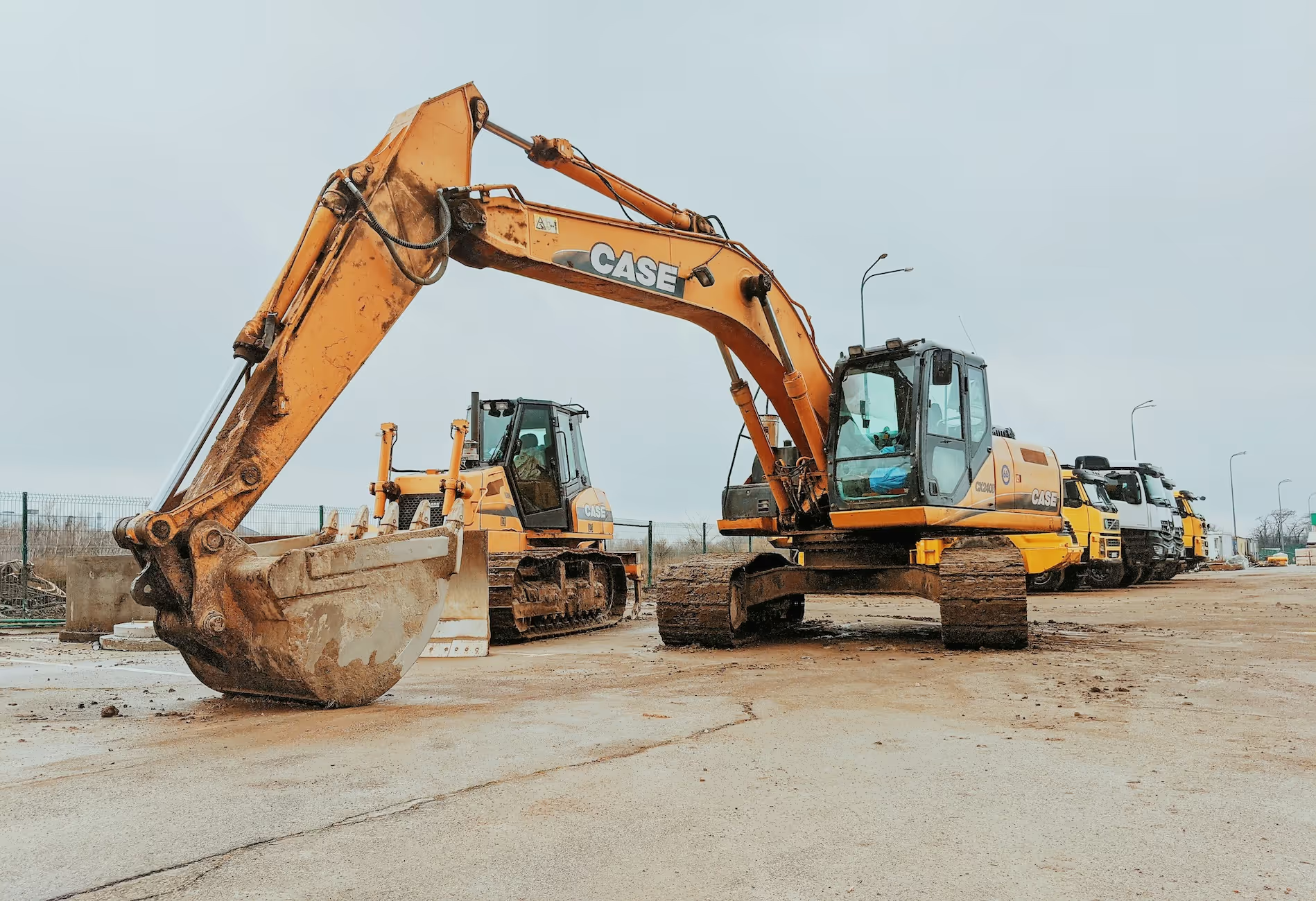
Fleet and facilities operations are the operational backbone of local government.
Vehicles, heavy equipment, fuel systems, buildings, and capital assets must function reliably every day to support public works, utilities, public safety, courts, parks, and administrative services. These systems are asset-intensive, capital-driven, and operationally complex.

Read
Bio
When governance is fragmented, lifecycle planning is inconsistent, utilization is unclear, or funding models are misaligned, service reliability declines, and long-term costs escalate. We help governments modernize fleet and facilities operations through data-driven utilization analysis, lifecycle cost modeling, preventive maintenance optimization, capital planning alignment, governance review, performance management development, and technology evaluation. Our work focuses on strengthening operational deployment, improving financial sustainability, optimizing asset replacement strategies, and aligning infrastructure investment with long-term service expectations. We provide clear tradeoffs, quantified impacts, and structured implementation pathways that support informed executive and policy decision-making.
Fleet management is a strategic asset stewardship function that directly affects service delivery, emergency response, workforce productivity, and fiscal sustainability. Public sector fleets must balance preventive maintenance compliance, technician staffing capacity, shop deployment, fuel system resiliency, and long-term replacement planning—while navigating evolving technology markets and electrification pressures.
We work with governments to assess fleet operations holistically, including maintenance labor productivity, shop configuration, adequacy of replacement funds, internal service fund rate structures, heavy equipment utilization, and fuel system configuration. Our approach integrates workload data, lifecycle modeling, financial analysis, and operational benchmarking to ensure fleet operations are efficient, transparent, and financially sustainable.
We also support strategic transitions such as fuel site consolidation, technician deployment restructuring, heavy equipment optimization, and fleet electrification planning—ensuring that modernization initiatives are both operationally feasible and fiscally defensible.
Facilities management represents a long-term asset stewardship responsibility that extends beyond maintenance. Facilities divisions must manage preventive maintenance, work order systems, capital project delivery, contract oversight, asset condition monitoring, security system ownership, and 24-hour operational coverage across diverse building portfolios.
We help governments evaluate facility governance structures, purchasing workflows, capital project controls, analytical capacity, succession-planning risks, and customer service communication practices. Our work frequently identifies operational inefficiencies—such as paper-based procurement processes, inconsistent project tracking, unclear ownership of building systems, and contract management gaps—that create avoidable delays and customer frustration.
Our recommendations focus on strengthening data-driven asset management, clarifying service ownership, modernizing procurement and financial workflows, enhancing project management controls, and aligning staffing capacity with high-demand facilities such as public safety buildings. The result is a more transparent, performance-driven facilities organization capable of sustaining service quality while managing long-term capital risk.