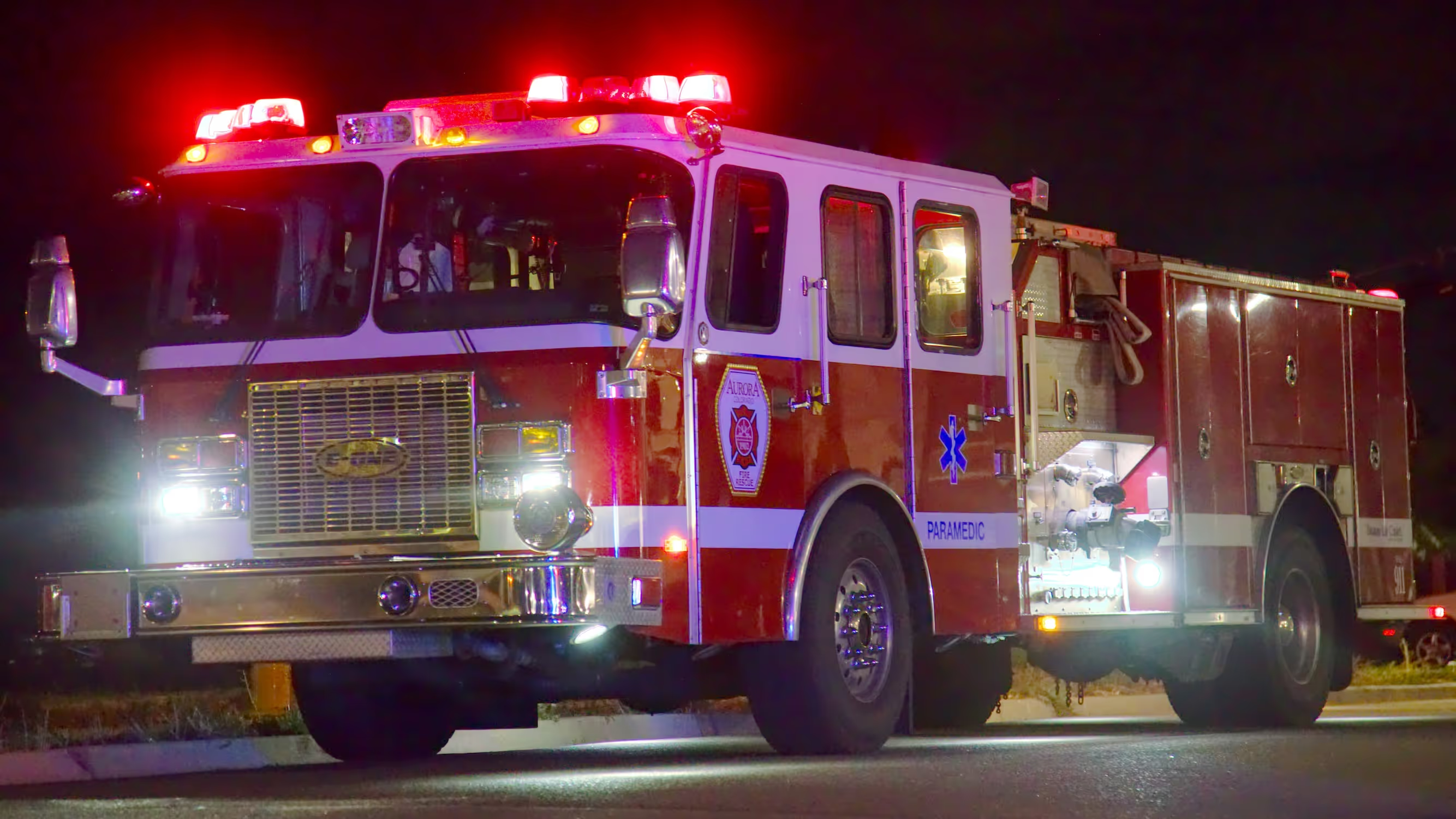
Public safety is one of the primary reasons that local government exists.
Communities form to govern themselves, establish standards and laws, and determine how to best enforce those rules through a variety of services. Police departments, fire protection, and emergency medical services exist to provide whatever level of service the community deems appropriate. While there are best practices for various public safety philosophies, ultimately, the local community decides what level of service it desires and is willing to fund.
Read
Bio
We approach reviews of public safety operations and staffing with this in mind. Whether conducting a police staffing and operations assessment, evaluating fire and EMS workload patterns, or developing long-term revenue requirements models, we look at the complete picture. As we evaluate the level of service provided, we also look for indicators of satisfaction or dissatisfaction with current standards and help identify solutions that provide a better fit for each community.
We work with:
Law enforcement agencies today operate in an environment defined by rising service expectations, workforce constraints, evolving crime trends, and increasing community scrutiny. We help cities and counties move beyond simple officer-per-capita ratios and toward workload-driven, policy-aligned service models that are operationally defensible and financially sustainable. Our work integrates call-for-service analysis, patrol deployment modeling, proactive policing capacity evaluation, investigations caseload assessment, specialty unit review, civilianization opportunities, organizational structure analysis, benchmarking, and long-term fiscal impact modeling. Whether a community is refining patrol staffing, reducing overtime dependency, strengthening investigative capacity, or evaluating alternative service delivery models, we provide clear tradeoffs, quantified impacts, and actionable implementation pathways that support informed policy decisions.
Fire and EMS departments must balance emergency response performance, firefighter health and safety, training rigor, prevention services, and facility modernization within constrained municipal budgets. We evaluate fire and EMS systems through response time analysis, deployment modeling, staffing coverage review, overtime assessment, training structure evaluation, prevention and inspection workload analysis, and fire station location studies. Our work extends beyond operational metrics to include organizational design, capital planning alignment, equipment and technology modernization, and facility condition assessment. We focus on ensuring that departments have the staffing, facilities, and management structure necessary to meet service-level expectations while protecting firefighter safety and positioning the organization for long-term resilience.
Emergency Communications Centers are the operational nerve center of public safety systems. Yet many centers face chronic staffing shortages, heavy reliance on overtime, supervisory strain, and increasing call complexity. We evaluate communications centers through workload-based staffing analysis, minimum staffing modeling, shift alignment review, supervisory structure assessment, technology evaluation, and integration analysis with patrol and field operations. Our approach recognizes that communications performance directly affects response times, officer safety, and community outcomes. We help agencies establish sustainable staffing standards, reduce reliance on mandatory overtime, clarify the chain of command, and position emergency communications as a strategic function within the broader public safety ecosystem.